
Canadian Entrepreneurs Drive Innovation in Climate‑Resilient Infrastructure
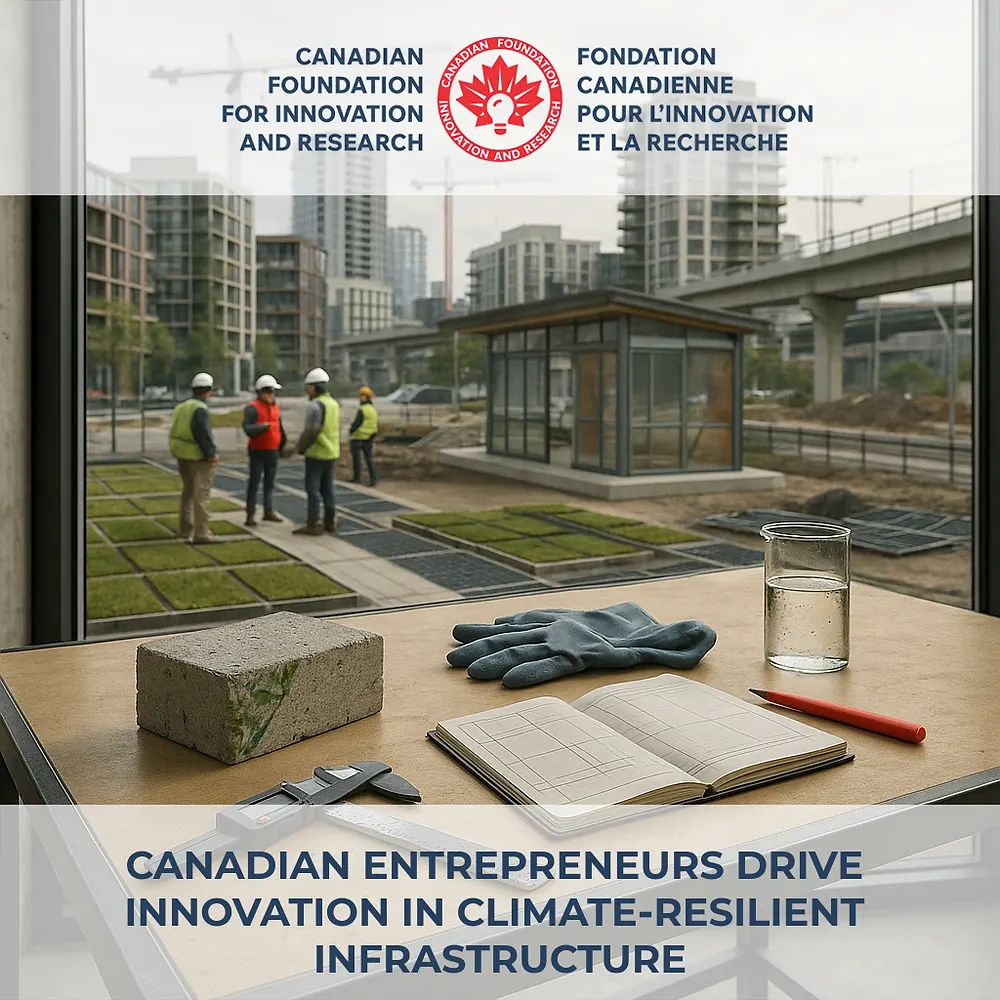
Much of this work traces back to federal and provincial goals for climate‑adaptive urban systems by 2025. Meeting those targets demands collaboration between research institutions and the business community. Startups are increasingly born from academic labs, translating discoveries in sustainable design into pilot projects for housing, transit, and stormwater systems. These partnerships often serve as early test cases for national adaptation strategies, aligning environmental science with local economic priorities.
CFIR‑supported groups have been studying how new construction methods can reduce carbon intensity while improving community safety. Their models use sensor data and satellite mapping to anticipate how infrastructure reacts to heat and moisture, allowing planners to adapt designs before ground is even broken. The emphasis is not just technological but social—building the expertise that Canadian cities will depend on for decades.
Still, the challenge remains: how to fund and scale these solutions at the speed the climate demands. Many innovators now view climate resilience as both a necessity and a market opportunity, positioning Canada to export practical, science‑based infrastructure knowledge abroad. If the current momentum holds, the next generation of Canadian cities may be designed as living laboratories of adaptation rather than fortresses against change.
Partner with us: https://www.research.ca/contact-cfir
Apply for support: https://www.research.ca/apply
For more information: https://www.research.ca/
Share article
More from CFIR’s News
-
 AGRI TECH
How Canada’s Entrepreneurs Are Redefining Food Innovation for 2025
AGRI TECH
How Canada’s Entrepreneurs Are Redefining Food Innovation for 2025
-
 AGRI TECH INNOVATION
Canada's Agri-Tech Momentum: Research and Entrepreneurship Driving Food Security
AGRI TECH INNOVATION
Canada's Agri-Tech Momentum: Research and Entrepreneurship Driving Food Security
-
 HEALTH TECH INNOVATION
Canadian Entrepreneurs Propel Health-Tech Momentum in 2025
HEALTH TECH INNOVATION
Canadian Entrepreneurs Propel Health-Tech Momentum in 2025
-
 DIGITAL HEALTH
Canadian Entrepreneurs Drive the Future of AI in Health Data
DIGITAL HEALTH
Canadian Entrepreneurs Drive the Future of AI in Health Data