A Turning Point for Canada’s Battery Materials Pathway
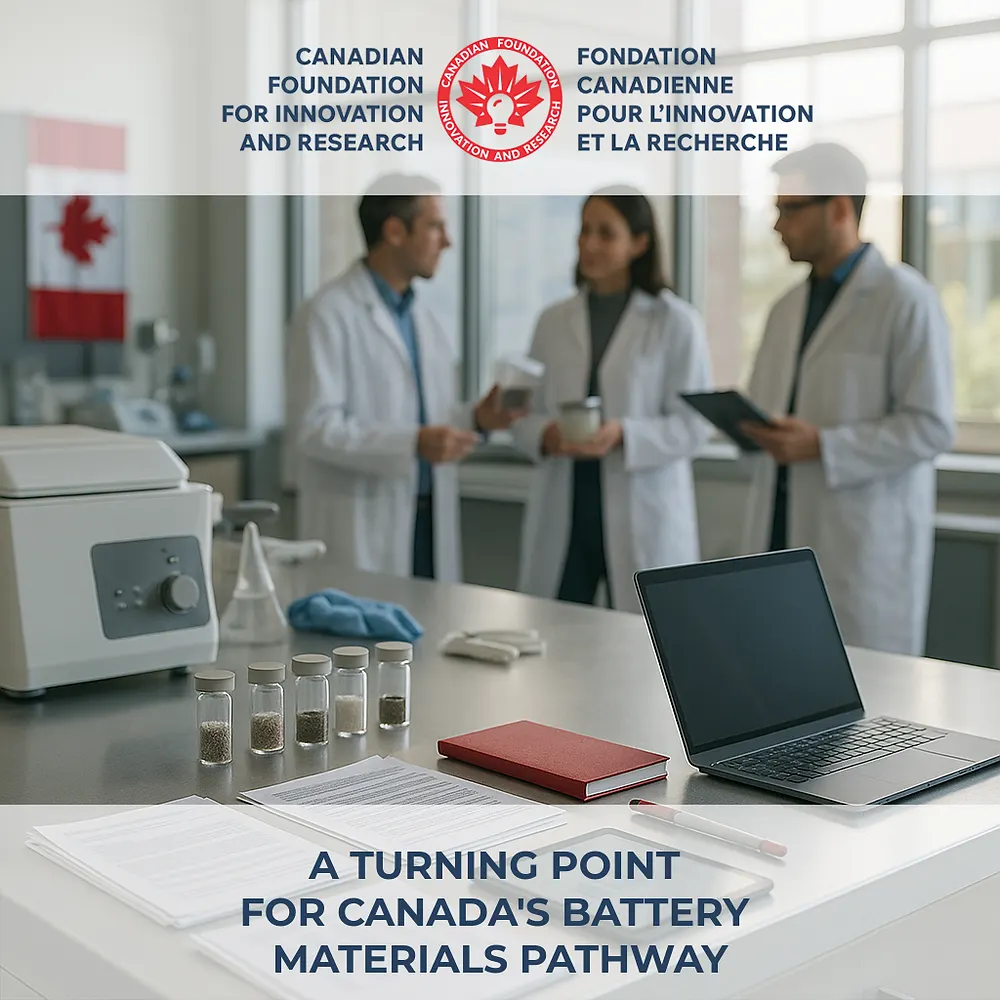
Laboratory teams working on lithium iron phosphate, or LFP, cathode materials are beginning to cross that critical threshold from bench-scale research to pre-commercial deployment. Facilities that once focused on synthesis and analysis are now experimenting with continuous feed systems, durability testing, and quality control protocols similar to those used in industrial qualification. These developments point to a shifting innovation landscape: Canada is no longer content to export raw critical minerals but is investing in the know-how to manufacture intermediate products with value retained at home.
For the Canadian Foundation for Research and Innovation (CFIR), this emerging stage links discovery science with the realities of market entry. Foundation-backed programs support the talent pipelines and pilot operations that help early ventures validate their processes before moving into full production. The broader aim is not simply to build battery plants, but to strengthen a domestic ecosystem where research expertise, technical infrastructure, and sustainable industrial practice grow together.
Still, Canada’s path forward depends on persistent collaboration. The battery materials field moves quickly, and pilot successes can falter without skilled workers, steady demand, or regional coordination. Yet this moment feels different—less about rhetoric and more about readiness. If progress continues, 2024 may well be remembered as the year Canada’s battery materials strategy began to take tangible shape.
Partner with us: https://www.research.ca/contact-cfir
Apply for support: https://www.research.ca/apply
For more information: https://www.research.ca/