
How New Student Policies Are Reshaping Startup Hiring
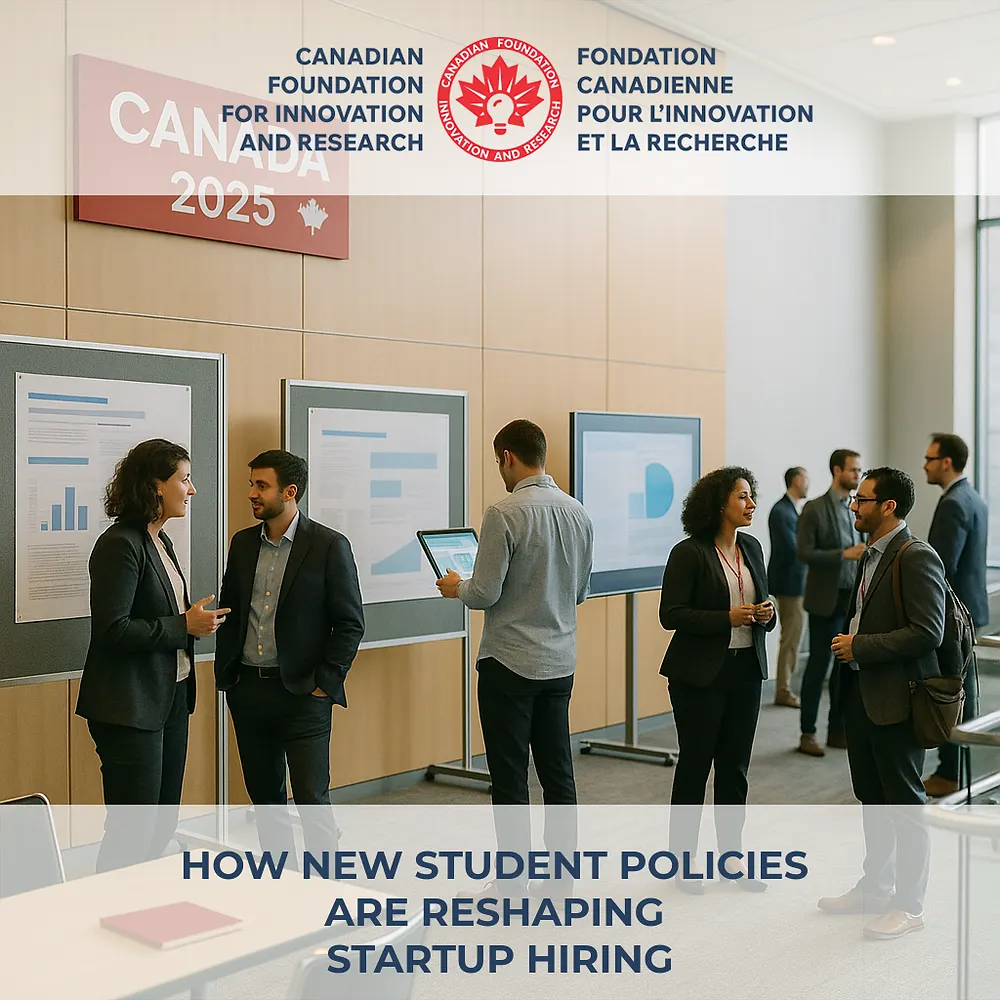
For emerging ventures, especially those rooted in research or technology, campus collaboration has long been a gateway to new ideas and workforce development. When international hiring pathways tighten, those ventures often turn to local talent and applied-research partnerships as alternative routes. Career centres and incubators report more domestic graduates exploring entrepreneurial positions rather than traditional corporate placements — a shift that may gradually rebalance Canada’s innovation workforce.
The Canadian Foundation for Research and Innovation (CFIR) is among the organizations monitoring these transitions closely. Through scholarships, early research pilots, and seed funding for student-led projects, CFIR helps sustain the link between academic learning and venture creation. Such programs provide graduate and undergraduate researchers with the resources to transform prototypes into viable business opportunities, ensuring that homegrown talent remains active within Canada’s innovation economy.
Still, the broader challenge remains: how to keep Canada attractive to both international minds and domestic graduates eager to build careers in discovery and entrepreneurship. As policy frameworks evolve, the balance between education, immigration, and innovation will shape how new companies find their people — and how Canada defines its next generation of builders.
Share article
More from CFIR’s News
-
 CRITICAL MINERALS
A Turning Point for Canada’s Battery Materials Pathway
CRITICAL MINERALS
A Turning Point for Canada’s Battery Materials Pathway
-
 CANADIAN INNOVATION
How 2025 Is Raising the Bar on IP for New Ventures
CANADIAN INNOVATION
How 2025 Is Raising the Bar on IP for New Ventures
-
 CANADIAN INNOVATION
Navigating Canada’s 2025 Founder-Tax Reset
CANADIAN INNOVATION
Navigating Canada’s 2025 Founder-Tax Reset
-
 INDIGENOUS INNOVATION
Indigenous-Led Entrepreneurship Hubs Are Driving Research and Startup Growth in 2025
INDIGENOUS INNOVATION
Indigenous-Led Entrepreneurship Hubs Are Driving Research and Startup Growth in 2025