Canada’s 2025 Microelectronics Shift Speeds Lab To Fab
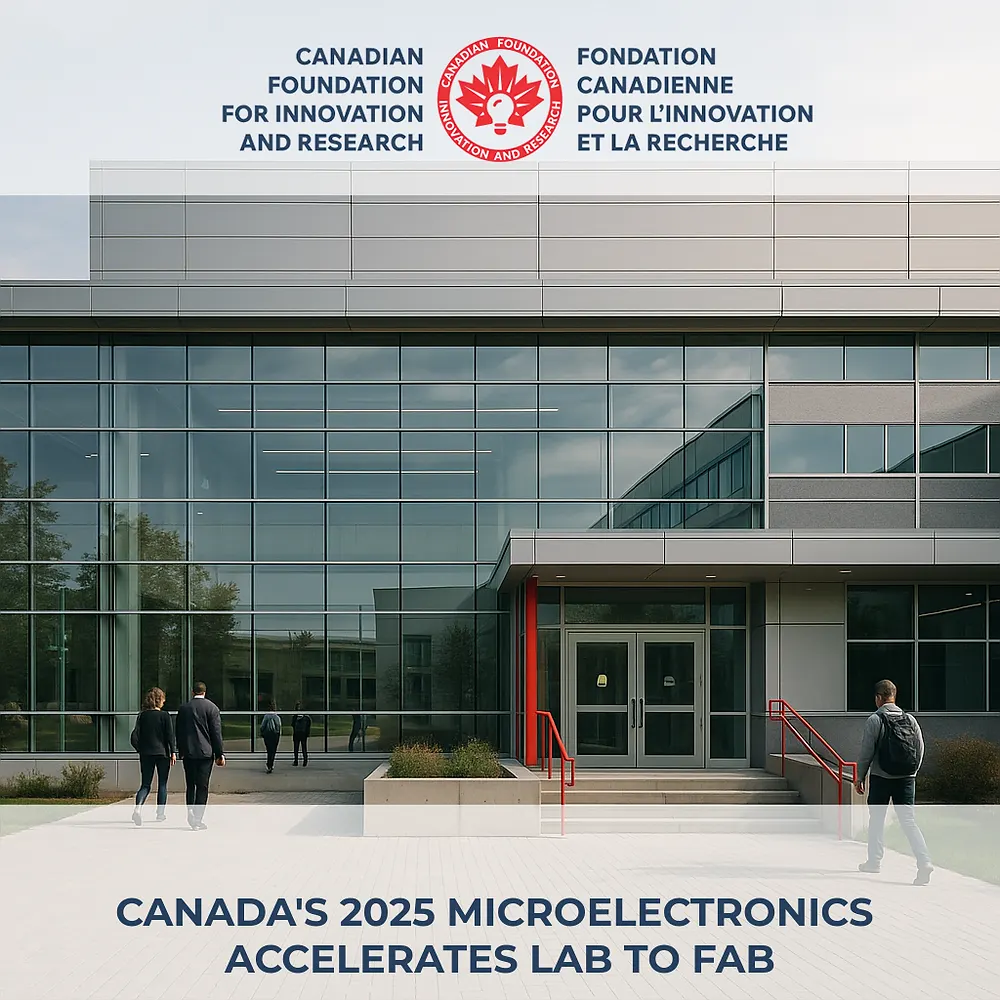
This shift reflects a wider trend in Canadian innovation policy: the drive to bring advanced materials, photonics and semiconductor work closer to practical deployment. Universities and national labs are aligning their fabrication timelines with industrial demand, making it easier for startups to plan wafer runs and meet international standards. Analysts say this integration of academic and applied effort could strengthen domestic supply chains and keep intellectual property anchored in Canada.
The Canadian Foundation for Research and Innovation (CFIR) contributes to this momentum through funding streams that connect researchers, graduate students and entrepreneurs at critical early stages. By supporting scholarships, applied research grants and seed projects, CFIR helps teams design with manufacturability in mind and gain the commercial insight needed to scale. It’s a pragmatic response to a long-standing challenge: how to translate scientific discovery into sustainable Canadian manufacturing capability.
As 2025 approaches, the transition from lab to fab is becoming less of an aspiration and more of a coordinated movement. Canada’s microfabrication landscape is no longer defined solely by experimentation in cleanrooms but by the steady rhythm of production-ready innovation. That rhythm could shape how the next generation of chips, sensors and photonics devices are built—at home, and for export—to meet the world’s growing demand for reliable, efficient technology.
Partner with us: https://www.research.ca/contact-cfir
Apply for support: https://www.research.ca/apply
For more information: https://www.research.ca/