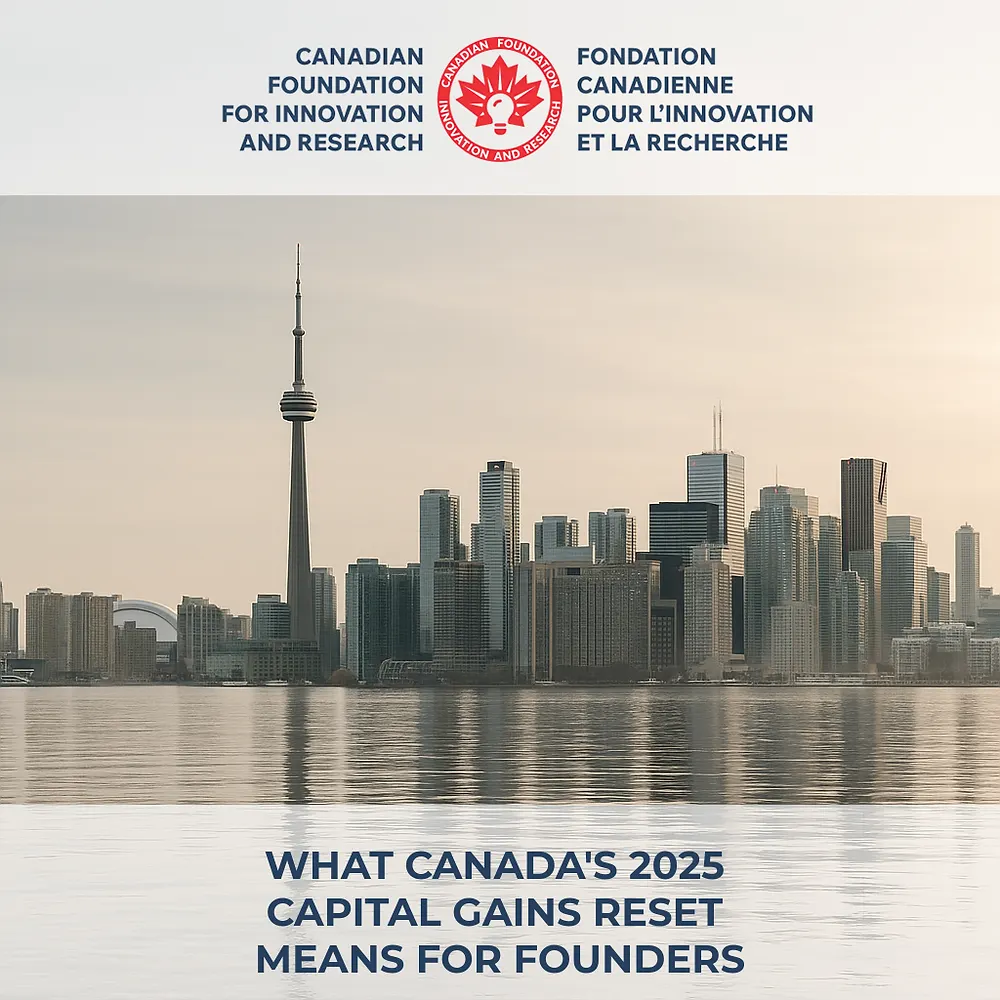
What Canada’s 2025 Capital Gains Reset Means For Founders
The capital gains framework is also evolving in quieter ways. The new Canadian Entrepreneurs Incentive, which will phase in a lower, one-third inclusion rate on up to roughly two million dollars of qualifying gains, complements the existing lifetime exemption near 1.25 million dollars. Together, those measures could significantly reshape the arithmetic of exits in the mid–seven-figure range. Founders who built companies through patient R&D may now find that their personal risk and reinvestment horizons align more closely with Canada’s broader innovation goals.
Still, many early-stage ventures struggle to reach that point. Canada’s venture landscape is adjusting to higher interest rates, smaller seed rounds, and a renewed appetite for research partnerships. Sources in national innovation programs note rising interest in blending private investment with academic insight, especially in clean technology, AI, and health research. In this shifting terrain, organizations such as the Canadian Foundation for Research and Innovation (CFIR) continue to bridge funding gaps through targeted scholarships, early seed support, and policy research focused on equity structures that help young firms retain talent.
The policy reversal on capital gains does more than preserve status quo taxation. It signals a commitment to stability at a moment when founders are striving to turn intellectual capital into sustainable growth. For Canada’s innovation economy, that steadiness may be just as valuable as new funding streams—offering room to plan, reinvest, and build the next generation of research-driven enterprises.
Partner with us: https://www.research.ca/contact-cfir
Apply for support: https://www.research.ca/apply
For more information: https://www.research.ca/